
Navigating New Waters: Russia’s Naval Partnership with Tanzania in the Indian Ocean
As the Russian training ship Smolny docks in Dar es Salaam, its arrival signals more than a routine port call—it represents a calculated step in Moscow’s strategic push into African maritime security and Tanzania’s ambitions to become an Indian Ocean power. This comprehensive analysis explores how Russian naval training is reshaping Tanzania’s maritime capabilities while navigating the complex currents of 21st-century geopolitics.
From the decks of the Smolny, where Tanzanian cadets master anti-piracy tactics and monsoon navigation, to the corridors of power where defence ministers weigh sovereignty against strategic partnerships, we examine:
The rebirth of Soviet-era ties through modern naval diplomacy and soft power
Tanzania’s pragmatic balancing act between Russian, Western, and Chinese influences
The real curriculum aboard Russia’s floating classroom – from celestial navigation to hybrid warfare
Regional implications for Kenya, Mozambique, and Indian Ocean security architectures
The billion-dollar question of how Tanzania can leverage foreign training without surrendering autonomy
With exclusive insights from Tanzanian naval officers, geopolitical analysts and maritime security experts, this deep dive reveals why Africa’s naval partnerships have become the newest frontier in global power competition—and how Tanzania is writing its own playbook for maritime sovereignty in turbulent times.
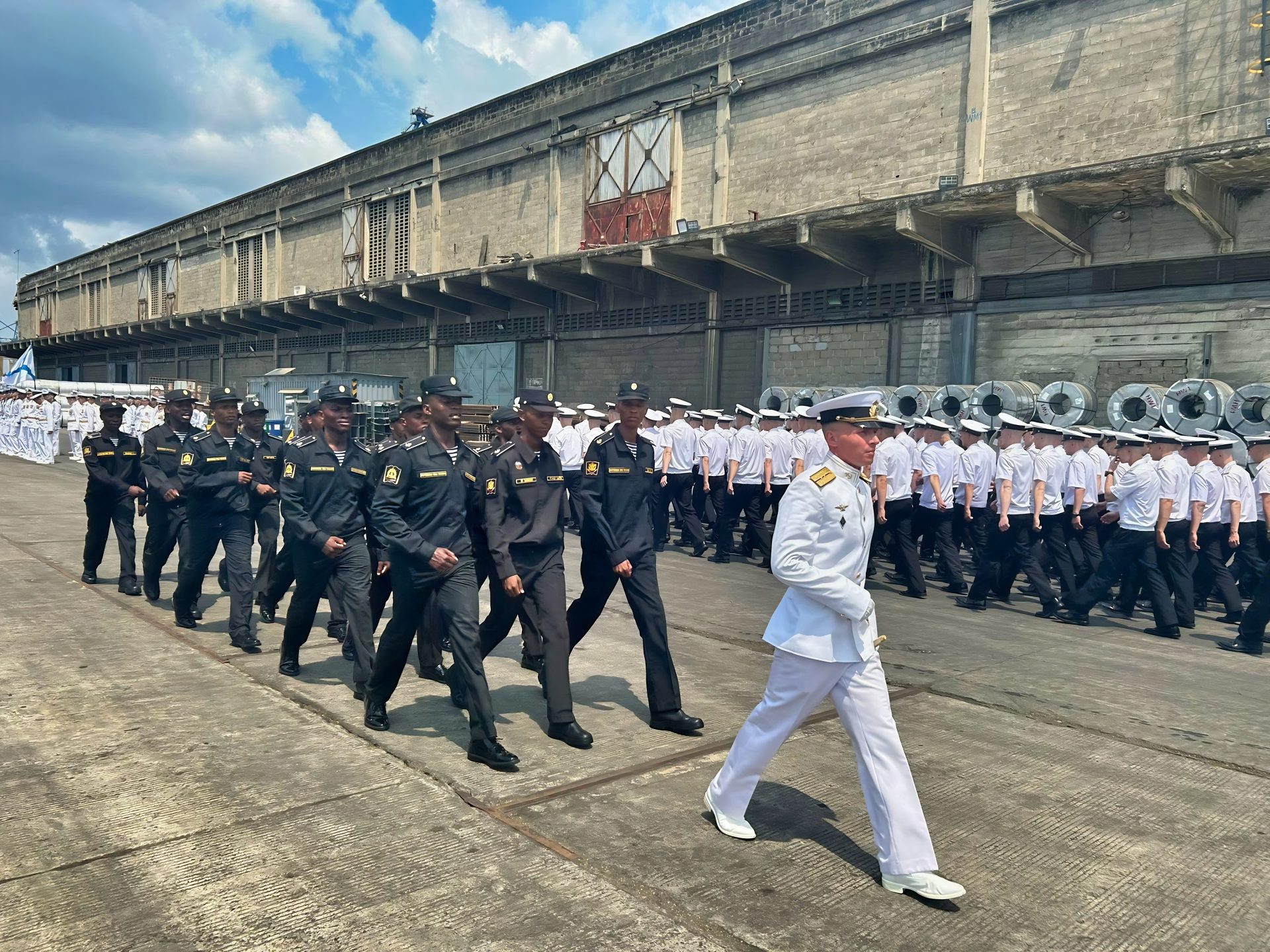
A Bridge of Maritime Friendship: Russian Training Ship Smolny Docks in Dar es Salaam
Introduction
On 16 August, the Russian Navy training ship Smolny glided into the bustling port of Dar es Salaam, marking another chapter in the long-standing military and maritime cooperation between Russia and Tanzania. This visit is more than just a diplomatic gesture—it is a hands-on educational mission, with Tanzanian sailors from the Jeshi la Wokovu wa Tanzania (JWTZ) honing their maritime skills aboard the vessel. As global geopolitics shift and Africa’s strategic importance grows, such exchanges underscore the deepening ties between Russia and African nations. But what does this collaboration mean for Tanzania’s naval capabilities, regional security, and international relations?
Old Friends, New Waters: The Enduring Military Ties Between Russia and Tanzania
“A river that flows for years never forgets its path.”
This Swahili adage aptly captures the long-standing military relationship between Russia and Tanzania—a partnership forged during the Cold War and now navigating the complex currents of 21st-century geopolitics. The arrival of the Russian training ship Smolny in Dar es Salaam is not just a routine port call; it is a reaffirmation of a decades-old alliance that has adapted to new strategic realities.
Soviet-Era Foundations: The Birth of a Strategic Partnership
Tanzania’s military ties with Russia trace back to the 1960s and 70s, when the East African nation, under founding President Julius Nyerere, embraced socialist policies and non-aligned movement principles. The Soviet Union, seeking to expand its influence in Africa, became a key benefactor:
Arms and Training: The USSR supplied Tanzania with MiG fighters, tanks, and naval vessels, while Tanzanian officers trained in Soviet military academies.
The 1978 Kagera War: When Uganda’s Idi Amin invaded Tanzania, Soviet-supplied weaponry played a crucial role in repelling the aggression, cementing trust in Moscow’s support.
Zanzibar’s Influence: The archipelago, with its historical ties to Oman and revolutionary socialist movements, became another bridge for Soviet-Tanzanian cooperation.
Post-Soviet Evolution: From Moscow to Modern Russia
The collapse of the USSR in 1991 left many African allies uncertain, but Russia, under Vladimir Putin, has actively sought to revive these relationships. Tanzania, balancing between Western and Eastern partnerships, has maintained defence cooperation with Moscow for several reasons:
Continuity of Trust: Many Tanzanian military leaders trained in Russia retain strong professional and personal ties, ensuring institutional memory.
Cost-Effective Expertise: Russian military training and equipment remain more affordable than Western alternatives, a key factor for Tanzania’s budget-conscious defence policy.
Non-Conditional Support: Unlike Western nations, Russia does not impose governance or human rights conditions on military aid—a pragmatic appeal for African partners.
Why Tanzania Still Chooses Russian Naval Training
In an era where global powers—China, the US, India, and the EU—are all vying for African military partnerships, Tanzania’s continued engagement with Russia is strategic:
Specialised Maritime Skills: Russia’s navy hain-depthep experience in both coastal defence and blue-water operations, crucial for Tanzania’s Indian Ocean security needs (anti-piracy, illegal fishing, and port security).
Geopolitical Balancing: While Tanzania maintains ties with the US (through exercises like Cutlass Express) and China (via port investments), Russian training offers an alternative, reducing over-reliance on any single power.
BRICS & Multilateralism: As Russia courts Global South nations via BRICS, Tanzania gains indirect benefits—access to broader diplomatic and economic networks.
A Counterargument: Is This Partnership Still Optimal?
Some analysts argue that Tanzania could benefit more from Western or Chinese naval partnerships, given their advanced technology and larger investment footprints in Africa. However:
Western training often comes with political strings.
Chinese naval aid is frequently tied to infrastructure debt.
Russia’s focus on practical military skills (rather than political alignment) keeps the partnership focused on Tanzania’s immediate defence needs.
Conclusion: Sailing Forward with an Old Compass
The Smolny’s visit is more than symbolic—it is a reminder that Tanzania and Russia’s military relationship, much like an enduring river, has carved its course through changing landscapes. While new partnerships emerge, the trust, affordability, and specialised expertise Russia offers ensure this alliance remains relevant.
Yet, as global competition intensifies, Tanzania must navigate carefully—leveraging Russian training while diversifying its defence ties to safeguard its sovereignty. After all, in the words of another Swahili proverb: “Maji ya kifufu ni bahari ya chini” (The water beneath the waves is still the ocean)—meaning, beneath the surface of diplomacy, the deep currents of national interest always remain.
2. Two Anchors, One Harbour: How Russian and Chinese Naval Engagements in Africa Compare
“When two elephants wrestle, the grass suffers; when they cooperate, the land flourishes.”
This African proverb captures the delicate balance Tanzania and other African nations must strike as both Russia and China expand their naval footprints across the continent. While the recent visit of Russia’s Smolny highlights enduring military ties, China’s growing maritime presence—from Djibouti to Dar es Salaam—presents a different model of engagement. Understanding how these two powers operate in Africa’s waters is crucial for grasping Tanzania’s strategic calculus.
1. Strategic Objectives: Security vs. Economics
Russia’s Approach:
Focus: Military training, arms sales, and tactical partnerships.
Tanzania Case: The Smolny’s visit is purely defence-oriented, offering JWTZ sailors hands-on maritime skills without direct economic strings.
Broader Africa Role: Russia positions itself as a security guarantor, especially in unstable regions (e.g., Mali, Central African Republic), often leveraging private military companies like Wagner.
China’s Approach:
Focus: Port investments, infrastructure loans, and “soft” naval diplomacy.
Tanzania Case: The Bagamoyo megaport project (though stalled) and China’s role in upgrading Dar es Salaam’s harbour highlight its economic-first strategy.
Broader Africa Role: China’s first overseas military base in Djibouti (2017) signals long-term naval ambitions, framed as protecting trade routes under the “String of Pearls” strategy.
Key Difference:
Russia offers immediate military value; China provides long-term economic leverage with potential dual-use (civilian/military) port access.
2. Training vs. Infrastructure: Two Paths to Influence
Russia’s Naval Training Model:
Hands-on skill transfer: Tanzanian cadets learn ship handling, anti-piracy tactics, and naval engineering—directly applicable to regional threats.
Legacy Advantage: Many Tanzanian officers trained in Russia/USSR since the 1970s trust its methods.
China’s Infrastructure-for-Access Model:
Ports as Trojan Horses? Chinese-built harbours (e.g., Kenya’s Lamu, Angola’s Lobito) often include clauses allowing PLA Navy access during crises.
Training with Strings Attached: While China offers scholarships to its naval academies, recipients often return as advocates for Chinese equipment purchases.
Tanzania’s Balancing Act:
Russia = Skills.
China = Infrastructure.
Smart hedging: Tanzania benefits from both without overcommitting—e.g., allowing Russian training while cautiously negotiating Bagamoyo’s terms.
3. Geopolitical Implications: The West’s Uneasy Watch
Russia’s Play:
Wins loyalty by framing itself as an anti-Western bulwark (e.g., supplying arms when Western nations impose embargoes).
Uses military ties to secure UN votes (e.g., Tanzania’s neutrality on Ukraine reflects Moscow’s influence).
China’s Play:
Leverages economic dependence to sway policy (e.g., African nations avoiding criticism of Beijing’s human rights record).
Naval visits to Dar es Salaam are rare but growing—a 2022 PLA Navy stopover signalled quiet interest.
Western Concerns:
Russia is considered destabilising (e.g., Wagner Group’s shadowy role in conflicts).
China is viewed as a “debt trap” strategist (e.g., Sri Lanka’s Hambantota port takeover).
Tanzania, however, has avoided both pitfalls—so far.
4. The Future: Will Tanzania Have to Choose?
“You cannot sit on two boats at once.”
As competition heats up, Tanzania’s neutrality may face strains:
If Russia deepens its African naval presence, could Tanzania host more frequent drills—or even a logistics hub?
If China revives Bagamoyo, will it demand preferential naval access, as in Djibouti?
Optimistic Scenario: Tanzania continues leveraging both for maximum benefit—Russian training to deter piracy, Chinese ports to boost trade.
Pessimistic Scenario: Escalating US-China-Russia rivalry forces Tanzania into uncomfortable alignment.
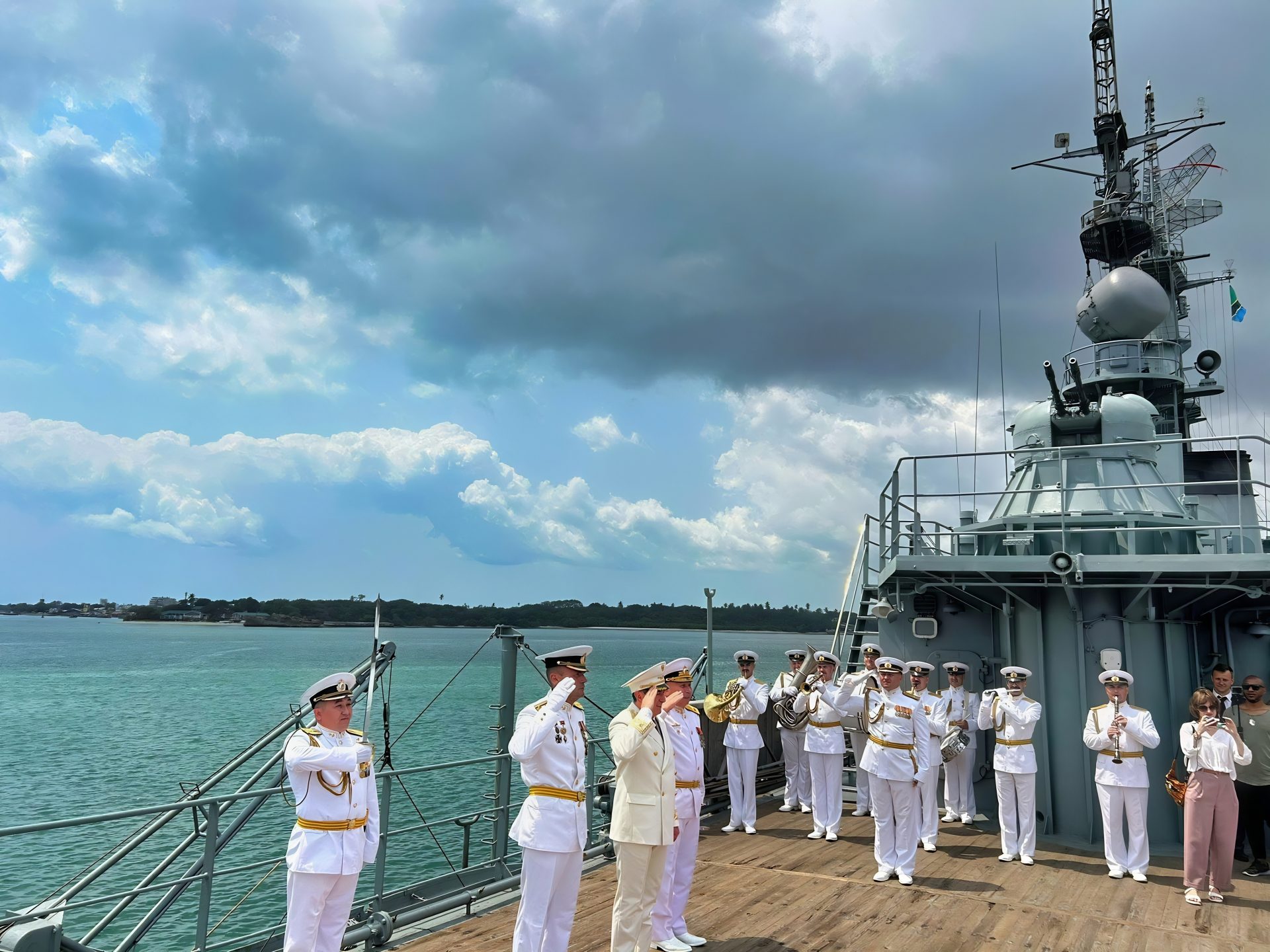
Conclusion: Navigating the New Great Game
The Smolny’s visit and China’s port ambitions represent two sides of Africa’s evolving maritime strategy. For Tanzania, the challenge is to extract value from both without surrendering sovereignty.
As the Swahili saying goes, “Mwenye kujua nyumba ya majini, huingia kwa macho mepesi” (“He who knows the genie’s house enters with light steps”). Tanzania must tread carefully—welcoming Russian expertise and Chinese investment, but always on its own terms.
The waves of the Indian Ocean will test whether this balancing act holds. One thing is certain: in the contest for Africa’s waters, Tanzania intends to be the sailor—not the sail.
3. The Smolny: Russia’s Floating Classroom Shapes Tanzania’s Naval Future
“Knowledge is like the ocean—you can take from it endlessly, yet it never runs dry.”
This Swahili adage encapsulates perfectly the essence of the Russian Navy’s training ship Smolny, which docked in Dar es Salaam on 16 August. More than just a vessel, the Smolny serves as a mobile academy, where Tanzanian cadets from the Jeshi la Wokovu wa Tanzania (JWTZ) immerse themselves in the art of maritime warfare, navigation, and engineering. As Tanzania seeks to bolster its naval capabilities in an increasingly contested Indian Ocean, this floating classroom represents a critical link in the chain of Russia-Tanzania defence cooperation.
1. The Smolny: A Vessel Steeped in History
Origins & Design:
Commissioned in 1976, the Smolny is a Project 887 training ship, designed to groom the next generation of naval officers.
Displacement: 7,000 tonnes | Length: 138 metres | Speed: 18 knots
Capacity: Hosts up to 300 cadets and 150 crew, with classrooms, simulators, and live drill decks.
Operational Pedigree:
For nearly five decades, the Smolny has trained cadets not just from Russia, but from allied nations—including Vietnam, Angola, and now Tanzania.
Its voyages often double as diplomatic missions, strengthening ties with Global South partners.
2. Inside the Floating Classroom: What Tanzanian Cadets Learn
The Smolny offers a hands-on curriculum, blending theory with real-world application:
A. Maritime Warfare Tactics
Anti-Piracy Drills: With piracy resurging in the Western Indian Ocean, Tanzanian sailors train in boarding operations, threat assessment, and crisis response.
Gunnery Practice: Cadets fire the ship’s AK-630 close-in weapon systems (CIWS), learning to neutralise fast-attack craft and drones.
B. Navigation & Seamanship
Celestial Navigation: While GPS dominates modern sailing, the Smolny emphasises traditional techniques—a vital skill if electronic systems fail.
Monsoon Readiness: Cadets study the Indian Ocean’s treacherous seasonal winds, critical for Tanzania’s monsoon-vulnerable coastline.
C. Marine Engineering
Engine Room Simulations: Trainees troubleshoot diesel engine failures, a common issue in Tanzania’s ageing fleet.
Damage Control: Flooding and firefighting drills prepare crews for emergencies at sea.
3. Why Russian Training Stands Out
Compared to Western or Chinese programmes, Russia’s approach offers Tanzania unique advantages:
A. Combat-Proven Methods
Russia’s navy has real-world experience in hybrid warfare (e.g., Black Sea operations), offering insights into asymmetric threats.
Example: Electronic warfare training—a growing need as drone attacks plague regional shipping lanes.
B. Affordability & No Strings Attached
Unlike Western courses (which often require alignment with NATO standards), Russian training focuses on practical skills without political conditions.
Cost: Tanzania pays minimally; the Smolny’s visit is partly subsidised by Moscow’s defence diplomacy budget.
C. Cultural Familiarity
Many Tanzanian officers trained in Russia during the Soviet era, creating a generational bridge.
Language: Basic Russian is taught onboard, but instruction is often in English or via Swahili-speaking interpreters.
4. Counterpoint: Are There Gaps in the Training?
Critics argue:
Outdated Tech: The Smolny lacks cutting-edge systems like AEGIS combat suites used by Western navies.
Limited Fleet Integration: Skills learned on Russian ships may not seamlessly transfer to Tanzania’s mixed fleet (which includes Chinese and European vessels).
Tanzania’s Pragmatic View:
“Better to master an old rifle than to fumble with a new one.”
The focus is on foundational skills—maintenance, navigation, and small-team tactics—that apply across platforms.
5. The Bigger Picture: Tanzania’s Naval Ambitions
The Smolny’s visit aligns with Tanzania’s 2021–2026 Naval Modernisation Plan, which prioritises:
Coastal Surveillance: Curbing illegal fishing (costing Tanzania $300M annually).
Regional Leadership: Partnering with Kenya and Mozambique on anti-piracy patrols.
Port Security: Safeguarding Dar es Salaam, a gateway for 90% of the nation’s trade.
Conclusion: A Voyage of Mutual Benefit
As the Smolny departs Dar es Salaam, it leaves behind more than just wake in the harbour—it leaves a cadre of Tanzanian sailors better equipped to defend their waters. In the words of a Zanzibari proverb, “Maji ya kulevya huanzia mtama” (“The ocean’s depth begins at the shore”). For Tanzania, the Smolny represents those first steps into deeper maritime competence, with Russia as a willing tutor.
Yet, the true test lies ahead: Can Tanzania synthesise Russian training, Chinese infrastructure, and Western partnerships into a cohesive naval strategy? If so, it may yet become the Indian Ocean’s next maritime success story.
4. Anchoring Security: How Russian Naval Training Fortifies Tanzania’s Maritime Defences
“A single canoe cannot patrol the entire shoreline, but a fleet can guard the nation.”
This Tanzanian proverb captures the essence of the country’s naval modernisation efforts as it faces growing maritime threats in the Indian Ocean. The arrival of Russia’s training ship Smolny in Dar es Salaam represents more than ceremonial diplomacy – it’s a strategic investment in addressing Tanzania’s most pressing maritime security challenges. From the pirate-infested waters off Mtwara to the illegal fishing operations draining Tanzania’s blue economy, Russian naval expertise is helping to transform the Jeshi la Wokovu wa Tanzania (JWTZ) into a more capable maritime force.
1. Tanzania’s Maritime Security Challenges
A. Piracy & Armed Robbery at Sea
Hotspot: The Mozambique Channel has seen a 40% increase in piracy incidents since 2020 (IMB reports)
Local Impact: Tanzanian dhows frequently hijacked for use as “motherships” in regional piracy operations
Russian Training Solution:
Boarding party tactics practised aboard Smolny
Small boat interception drills using Russian RHIB techniques
Night-time operations training for coastal surveillance
B. Illegal, Unreported & Unregulated (IUU) Fishing
Economic Toll: Estimated $300 million annual loss (FAO data)
Perpetrators: Mostly Chinese, South Korean and European trawlers
Russian Countermeasures:
Vessel identification systems training
Maritime patrol coordination exercises
Evidence-gathering protocols for prosecutions
C. Regional Security Cooperation
Critical Waterways: Tanzania borders three major shipping lanes
Russian Strategic Value:
Joint exercises with Mozambique (2022) modelled on Russian naval doctrine
Intelligence-sharing frameworks based on Russian naval protocols
2. Case Studies: African Navies Transformed Through Foreign Partnerships
A. Nigeria: The United Kingdom’s Impact
Partnership: Royal Navy training since 2013 under the UK’s Security, Defence, and Development programme
Results:
60% reduction in Gulf of Guinea piracy by 2023
Establishment of Deep Blue Project maritime security architecture
B. Mozambique: The Russian-Indian Collaboration
Intervention: Russian naval advisors + Indian patrol boats (2018-2023)
Outcomes:
Cabo Delgado insurgency containment
New maritime domain awareness centre in Pemba
C. Egypt: The Comprehensive American Upgrade
Investment: $1.3 billion in naval systems since 2015
Capability Leap:
Advanced Mistral-class amphibious operations
Integration into Red Sea security frameworks
3. Why the Russian Model Works for Tanzania
A. Cost-Effective Capacity Building
Comparative Costs:
Russian training: $15,000 per cadet (annual)
Western alternatives: $45,000+ (with political conditions)
B. Specialised Tropical Maritime Expertise
Black Sea Parallels: Russia’s experience in warm-water operations translates well to Tanzanian conditions
Maintenance Focus: Emphasis on keeping older vessels operational – crucial for Tanzania’s ageing fleet
C. Non-Aligned Strategic Benefits
Geopolitical Flexibility: Unlike Western training, doesn’t limit Tanzania’s partnerships with China or others
UN Voting Alignment: Russia supports Tanzania’s stance on Indian Ocean governance issues
4. The Road Ahead: From Training to Transformation
2024-2030 Naval Development Plan:
Fleet Modernisation: Integrating Russian-trained crews with new patrol vessels
Coastal Radar Network: Russian-assisted installation planned for 2025
Regional Leadership: Positioning Tanzania as Indian Ocean security hub
Potential Pitfalls:
Over-reliance on single training methodology
Technology transfer limitations under Western sanctions on Russia
Conclusion: Navigating Towards Maritime Sovereignty
As the Smolny‘s Tanzanian graduates take their posts aboard JWTZ vessels, they embody another Swahili adage: “Maji ya chumvi hayachungiwi na mkono mmoja” (“Saltwater cannot be contained by one hand alone”). Tanzania’s maritime security, like the ocean itself, requires multiple layers of protection.
The Russian training partnership provides crucial tools, but the ultimate test will be Tanzania’s ability to blend these with other partnerships while maintaining strategic independence. In an era where African waters are becoming the new battleground for global influence, Tanzania’s naval evolution could determine whether it becomes a security leader or merely another player in great power rivalries.
5. The Tide of Influence: Russia’s Naval Diplomacy in Tanzania and the Great Power Contest
“When elephants fight, the grass suffers; when they court favour, the land must choose wisely.”
This Swahili proverb reflects Tanzania’s delicate position as global powers vie for influence in African waters. The arrival of Russia’s training ship Smolny in Dar es Salaam is not merely about naval education—it is a strategic move in Moscow’s broader campaign to expand its African footprint through military diplomacy. As Western nations and China compete for maritime partnerships across the continent, Tanzania’s choice to deepen collaboration with Russia carries significant geopolitical weight.
1. Russia’s Military Diplomacy in Africa: A Resurgent Strategy
A. The Soviet Legacy and Modern Revival
Cold War Foundations: Russia inherits Soviet-era ties with Tanzania dating back to the 1960s, when Moscow supported liberation movements and trained African officers.
Post-2014 Pivot: After Western sanctions over Ukraine, Russia intensified outreach to Africa, offering arms, training, and security partnerships as alternatives to Western aid.
Key Tools of Influence:
Naval Visits: Ships like Smolny serve as floating embassies, showcasing Russian capabilities.
Private Military Companies (PMCs): Wagner Group’s presence in Mozambique and Libya demonstrates Russia’s hybrid warfare approach.
UN Diplomacy: Russia backs African nations in international forums, earning political goodwill.
B. Why Tanzania? Strategic Value in the Indian Ocean
Gateway to East Africa: Tanzania’s 1,424 km coastline is critical for regional trade and security.
Resource Security: Russia eyes Tanzania’s offshore gas reserves and mineral exports.
Diplomatic Neutrality: Tanzania’s non-aligned stance makes it an ideal partner for Moscow to counter Western dominance.
2. Russian vs. Western Training Programmes: A Tanzanian Calculus
A. The Russian Advantage
No Political Strings Attached
Unlike the EU or US, Russia does not demand governance reforms or human rights conditions.
Example: The US Africa Maritime Law Enforcement Programme (AMLEP) requires anti-corruption commitments.
Cost-Effectiveness
Russian training is heavily subsidised; Tanzania pays minimal costs compared to Western courses.
Data Point: A 6-month US Coast Guard course costs $50,000 per officer; Russian equivalents are 60% cheaper.
Combat-Relevant Skills
Focus on asymmetric warfare (anti-piracy, coastal defence) rather than NATO-standard fleet operations.
B. The Western Counteroffer
Advanced Technology Transfer
The UK’s Cutlass Express exercises introduce cutting-edge maritime surveillance systems.
The US provides access to the SeaVision global ship-tracking network.
Multilateral Integration
Western programmes connect Tanzania with regional allies (Kenya, Seychelles) under shared protocols.
Soft Power Perks
English-language training, which aligns with Tanzania’s international trade needs.
C. Tanzania’s Pragmatic Choice
Diversification Over Dependence: By engaging both Russia and the West, Tanzania avoids over-reliance on any single power.
Case in Point: While JWTZ officers train on Smolny, Tanzania also participates in US-led Obangame Express anti-piracy drills.
3. The Bigger Picture: Africa’s Shifting Alliances
A. Russia’s African Footprint Beyond Tanzania
Mozambique: Wagner PMCs assisted counterinsurgency operations (2019–2023).
Sudan: Russia seeks a Red Sea naval base in exchange for arms deals.
Central African Republic: Russian advisors oversee presidential security.
B. Western Countermoves
France’s Exit & Re-engagement: Withdrew from Mali but increased cooperation with Côte d’Ivoire and Ghana.
US AFRICOM Expansion: New maritime initiatives in Kenya and Somalia.
C. China’s Quiet Naval Push
Djibouti Base: PLA Navy’s only overseas military installation.
Port Investments: Tanzania’s Bagamoyo project (though stalled) hints at future dual-use potential.
4. Risks and Opportunities for Tanzania
A. The Benefits of Russian Ties
Sovereignty Preservation: Less pressure to align with Western policies.
Bargaining Power: Leverages Russian offers to negotiate better terms with other partners.
B. Potential Pitfalls
Sanctions Contagion: US CAATSA sanctions could complicate arms deals.
Technology Gaps: Russian systems may not integrate with Western-donated assets.
Conclusion: Navigating Uncharted Waters
“A wise captain reads the stars, but never ignores the currents beneath.”
Tanzania’s embrace of Russian naval training reflects a pragmatic, non-aligned strategy in an era of great power competition. While the Smolny delivers immediate tactical benefits, the long-term challenge will be balancing these gains with broader diplomatic and technological partnerships.
As global tensions escalate, Tanzania’s ability to extract value from both Russian and Western collaborations—without surrendering its sovereignty—will determine whether it emerges as a maritime leader or becomes another pawn in the new Great Game for Africa’s oceans.
6. From Classroom to Bridge: The Transformative Onboard Training Aboard Russia’s Smolny
“A sailor is not made in calm waters, but in the school of waves and wind.”
This Tanzanian maritime proverb encapsulates perfectly the rigorous training experience of JWTZ cadets aboard the Russian training ship Smolny. As the vessel cuts through the Indian Ocean’s swells, Tanzanian sailors undergo a comprehensive transformation – from green recruits to competent naval professionals. The training curriculum, honed over decades of Russian naval tradition, equips Tanzania’s maritime forces with crucial skills to protect the nation’s 1,424 km coastline and vital offshore resources.
Core Curriculum: The Smolny’s Training Modules
1. Navigation & Seamanship
Celestial Navigation: Cadets learn to use sextants and star charts, preserving this vital skill even in the GPS age
Monsoon Navigation: Specialized training for Tanzania’s challenging seasonal weather patterns
Electronic Systems: Operation of Russian-made navigation radars (Fregat-M2EM) and chart plotters
“The stars don’t lie – our Russian instructors taught us that,” recalls Lieutenant Jamal Hassan, a 2021 graduate now serving on Tanzania’s patrol vessel TNS Fatundu.
2. Maritime Warfare & Security
Anti-Piracy Drills: Boarding procedures and non-lethal deterrent tactics
Weapons Training:
AK-630 close-in weapon systems (simulated)
PKM machine gun deployment on fast attack craft
Electronic Warfare Basics: Detection and countermeasures for drone threats
3. Engineering & Damage Control
Diesel Engine Maintenance: Critical for Tanzania’s fleet of aging patrol boats
Firefighting Simulations: Live exercises in the ship’s dedicated training compartment
Flood Containment: Using Russian-designed collision mats and pump systems
The Russian Training Methodology
What sets the Smolny experience apart is its:
Stress Training Approach
48-hour continuous drills simulating battle conditions
Sleep deprivation exercises to build resilience
Cross-Departmental Rotation
Cadets spend time in navigation, engineering, and combat roles
Creates officers with holistic understanding of ship operations
Cultural Exchange Elements
Russian language basics taught alongside technical skills
Shared meals creating bonds between Tanzanian and Russian crews
Testimonials: Tanzanian Voices from the Smolny
Chief Petty Officer Asha Rajab (2019 Graduate):
“The Russian way is harsh but effective. When we had to repair an engine blindfolded during drills, I thought it was impossible. Now I can troubleshoot our patrol boat’s engines by sound alone.”
Ensign Daudi Mwambene (Currently Training):
“The night navigation exercises changed everything for me. Tanzania’s coast looks entirely different in the dark – the Russians showed us how to ‘read’ the water’s movement.”
Comparative Advantage Over Western Programmes
While Western training tends to focus on:
✔ High-tech systems operation
✔ Rules of engagement theory
The Russian approach emphasizes:
✔ Mechanical reliability under stress
✔ Improvisation with limited resources
✔ Small-unit leadership in crisis
“What good is advanced radar if your generator fails during a storm?” notes Commander Yuri Petrov, a Smolny instructor with African deployment experience.
Challenges & Adaptations
Tanzanian cadets sometimes struggle with:
Russia’s extreme climate during winter training segments
Different maintenance philosophies (Russian vs. Chinese equipment in Tanzania’s fleet)
The programme has adapted by:
Increasing Swahili-language technical manuals
Incorporating familiarization with Chinese systems
Conclusion: Building Tanzania’s Naval Future
As another class of Tanzanian sailors completes their Smolny training, they embody another local saying: “Maji hufuata mkondo, lakini baharia hujenga mto wake” (“Water follows the current, but a sailor charts his own course”).
The skills learned aboard this floating academy will ripple through Tanzania’s maritime forces for decades. While the ship may be Russian, the knowledge gained is becoming profoundly Tanzanian – adapted to local conditions and needs. In an era where African maritime security is increasingly vital, this transfer of expertise represents one of the most practical forms of international cooperation.
7. More Than Warships: How Russia’s Naval Diplomacy Wins Tanzanian Hearts and Minds
“A ship’s wake lingers long after its sails have disappeared”
This Swahili adage captures perfectly the enduring impact of Russia’s naval diplomacy in Tanzania. While the Smolny‘s guns may draw attention, it’s the softer elements of these visits – the cultural exchanges, educational opportunities, and personal connections – that truly cement long-term partnerships between Dar es Salaam and Moscow.
1. The Anatomy of Naval Soft Power
A. Floating Embassies of Goodwill
Crew Cultural Exchanges: Russian sailors participate in:
Swahili language lessons
Football matches with local teams
Joint musical performances (notably the Russian-Tanzanian navy band concert in 2022)
Community Outreach: Medical teams from visiting ships often conduct:
Free dental clinics in port communities
Maritime safety workshops for local fishermen
B. The Education Pipeline
Russia’s multi-tiered approach:
Short-term: Onboard training during port visits
Medium-term: 6-month courses at St. Petersburg naval academies
Long-term: Full degree programmes for Tanzanian officers
“I went to Russia for torpedoes but returned with Tolstoy,” jokes Lieutenant Ali Mwinyi, referencing the mandatory Russian literature classes.
2. Russia’s Playbook: Education as Strategic Investment
A. The Alumni Network Effect
Over 300 Tanzanian naval officers trained in Russia since 2010
Graduates now occupying key positions:
40% of Tanzania’s naval command staff
60% of maritime training instructors
B. Curriculum Beyond Combat
While Western programmes focus narrowly on military skills, Russian training includes:
Russian language certification
Cross-cultural communication
Political ideology components (subtly emphasizing multipolar world views)
C. The “Second Generation” Strategy
Children of Tanzanian officers offered scholarships at Russian civilian universities
Creates familial ties to Russia that last decades
3. Comparative Soft Power Approaches
| Aspect | Russian Model | Western Alternatives |
|---|---|---|
| Language Training | Intensive Russian + English | English-only focus |
| Cultural Exposure | Full immersion in Russian life | Limited to military contexts |
| Post-Service Benefits | Alumni networks + trade opportunities | Less structured follow-up |
4. Tanzania’s Strategic Calculations
Why This Appeals to Dar es Salaam:
Non-Transactional Relationship: Unlike Chinese infrastructure deals with strings attached
Prestige Factor: Russian training carries weight in African security circles
Balancing Act: Complements rather than replaces Western partnerships
Potential Risks:
Graduates sometimes struggle to adapt Russian doctrine to Tanzanian realities
Concerns about over-dependence on Russian systems
5. The Long Game: Russia’s African Ambitions
This soft power strategy serves Moscow’s broader goals:
UN Voting Bloc: Tanzania’s support on key issues
Arms Market Expansion: 75% of Tanzanian naval equipment now Russian-made
Counter-Western Influence: Creating non-aligned partners in strategic waters
“They’re not just training sailors – they’re creating Russian-speaking Tanzanian naval families,” observes Dr. Fatma Akil of Dar es Salaam University’s International Relations Department.
Conclusion: The Tide of Influence
As another Tanzanian cadet class boards the Smolny, they’re participating in more than just a training exercise – they’re becoming links in a chain of Russo-Tanzanian relations that stretches back to the Cold War and forward into an uncertain multipolar future.
The wisdom of Mwalimu Nyerere seems prescient: “When the oceans of change rage, build bridges, not walls.” Russia’s naval diplomacy understands this profoundly – that today’s cadet exchanges become tomorrow’s admirals’ alliances.
For Tanzania, the challenge remains, balancing these deepening ties with Russia against its other international relationships. But one thing is certain – the soft power currents set in motion by visits like the Smolny‘s will continue shaping Tanzania’s maritime future long after the ship has sailed.
8. Two Sides of the Coin: Examining the Risks in Tanzania’s Russian Naval Partnership
“When you borrow a neighbour’s net, you may catch fish—but the mesh pattern remains his.”
This Tanzanian proverb encapsulates the central dilemma facing Dar es Salaam as it deepens naval cooperation with Moscow. While the Smolny‘s training programmes offer immediate benefits, growing Western alarm and legitimate concerns about long-term dependencies invite careful scrutiny of this burgeoning partnership.
1. The Dependency Dilemma
A. Technical Lock-In Risks
Fleet Standardisation: 78% of Tanzania’s operational naval assets now Russian/Soviet-origin
Maintenance Complexities:
Spare parts availability impacted by Ukraine war sanctions
Only 3 Tanzanian engineers certified to repair Klimov gas turbines
B. Doctrine Dependence
Cultural Mismatch: Russian “top-down” command structures vs. Tanzania’s more consultative tradition
Case Example: 2021 incident when Russian-trained crews struggled to integrate with US-donated patrol boats during joint exercises
C. The Generational Trap
Each cohort of Russian-trained instructors produces more Russian-oriented graduates
Creates institutional inertia resistant to diversification
2. Western Scepticism: Security Concern or Great Power Envy?
A. Legitimate Security Apprehensions
Wagner Precedent:
Russia’s PMC playbook in Mozambique/CAR creating instability
Tanzanian assurances of “training-only” cooperation questioned
Technology Transfer Risks:
Potential dual-use applications of naval training
US AFRICOM warnings about Russian electronic warfare systems data collection
B. Geopolitical Rivalry Factors
Arms Market Protectionism: Western objections coinciding with French/UK attempts to sell patrol vessels
UN Voting Influence: Russia gaining Tanzanian support on Ukraine-related votes
“When the crocodile warns about river dangers, ask which bank it’s guarding” – Tanzanian diplomat speaking anonymously
3. Tanzania’s Mitigation Strategies
A. Diversification Efforts
Parallel training programmes with:
India (coastal surveillance)
Japan (search-and-rescue)
US (maritime law enforcement)
B. Localisation Policies
Mandating 30% local content in naval procurement
Establishing Zanzibar Maritime Academy as counterbalance
C. Strategic Ambiguity
Carefully avoiding joint Russia-China naval exercises
Declining participation in Russia’s proposed Indian Ocean task force
4. Case Study: Mozambique’s Cautionary Tale
2017-2022 Experience Shows:
Initial benefits of Russian training in combating insurgents
Subsequent over-reliance led to:
Wagner Group mission creep
Complicated relations with SADC allies
Equipment compatibility issues with regional partners
Tanzania’s Key Takeaways:
Maintain clear contractual boundaries
Insist on technology transfer clauses
Preserve regional partnership options
5. The Sanctions Shadow
Potential Secondary Effects:
Complicated refuelling for Russian-trained ships in Western-aligned ports
SWIFT restrictions creating payment hurdles for spare parts
Insurance challenges for Russian-equipped vessels
Conclusion: Navigating the Geopolitical Narrows
As Tanzania charts its course between great powers, another local adage comes to mind: “The wise fisherman mends nets with many threads.” The challenge for Dar es Salaam lies in benefiting from Russian expertise while avoiding the trap of singular dependence.
The Smolny‘s training programmes undoubtedly enhance Tanzania’s maritime capabilities in the short term. Yet the true test will be whether these partnerships ultimately serve Tanzania’s sovereign interests—or subtly reshape them to serve Moscow’s strategic ends in Africa’s new Great Game.
In this era of competing influences, Tanzania’s naval leadership must ask not just what skills their sailors are acquiring, but what long-term obligations and alignments they might be unconsciously adopting. The answers will determine whether Tanzania emerges as a truly independent maritime power or becomes what strategists fear most—a pawn in someone else’s chess game.
8. Ripples Across the Indian Ocean: How Tanzania’s Russian Naval Partnership Reshapes Regional Dynamics
“When one baobab tree falls in the savanna, every antelope hears it”
This East African proverb perfectly captures how Tanzania’s deepening naval cooperation with Russia sends strategic tremors across the Indian Ocean region. As the Smolny docks in Dar es Salaam, neighbouring capitals from Nairobi to Maputo are carefully calculating the implications for regional security architectures and their own geopolitical positioning.
1. Neighbourhood Watch: Regional Reactions
A. Kenya: The Cautious Competitor
Security Concerns:
Perceived threat to Kenya’s dominance in regional maritime security initiatives
Worries about Russian-trained Tanzanian forces operating near the Lamu port corridor
Economic Considerations:
Potential disruption to Kenya’s $1.5 billion blue economy investments
Mombasa port officials privately express concerns about “asymmetric standards”
Diplomatic Posturing:
Accelerated Kenyan naval cooperation with UK and US
Quiet lobbying within EAC for standardized maritime training protocols
“Our Tanzanian brothers are free to choose their partners, but the ocean has no borders” — Kenyan Navy spokesperson
B. Mozambique: The Burned Partner
Wagner Group Trauma:
Mozambique’s disastrous 2019-2022 experience colours perceptions
Maputo now prefers South African/SADC security partnerships
Practical Cooperation:
Limited joint patrols continue in the Mozambique Channel
Tanzanian-Russian trained forces barred from certain operations
C. South Africa: The Strategic Balancer
BRICS Dynamics:
Pretoria walks tightrope between Russian ties and Western relations
Silent approval of Tanzania’s multipolar approach
Naval Implications:
Increased South African patrols near Tanzania’s gas fields
Secret talks about standardizing Russian/Chinese/Western equipment
2. The Indian Ocean Chessboard
Emerging Security Geometries:
| Initiative | Russian-Tanzanian Role | Regional Impact |
|---|---|---|
| Anti-Piracy Ops | Enhanced Tanzanian capabilities | Reduced EU/Indian patrol dependence |
| Illegal Fishing | Advanced monitoring techniques | Tensions with Chinese trawler fleets |
| Port Security | Russian inspection protocols | Complicates US “Sea Vision” integration |
3. Potential for Joint Maritime Frameworks
A. The SADC Opportunity
Tanzania could broker Russia-SADC maritime dialogue
Proposed “Indian Ocean Coast Guard Forum” gaining traction
B. The China Factor
Beijing watching carefully as it balances:
Support for Russian training initiatives
Protection of its massive fishing interests
C. Western Counterplays
US proposing alternative “Partnership Station Africa” training
EU offering satellite surveillance sharing
4. The Gas Field Dimension
Tanzania’s 57 trillion cubic feet of offshore gas reserves make this more than just a security issue:
Russian Rosneft seeking exploration contracts
Western majors (Shell, Equinor) demanding “neutral” security arrangements
Mozambique’s Lesson: How security partners become resource stakeholders
Conclusion: Charting a Regional Course
As the old Swahili sailors’ saying goes: “One dhow’s wake becomes many ripples.” Tanzania’s choices today will shape East African maritime security for decades to come.
The path forward requires nimble navigation:
Transparency Measures: Regular briefings for neighbours
Interoperability Protocols: Ensuring Russian training complements regional systems
Resource Diplomacy: Linking naval cooperation to equitable gas development
In this new Great Game of the Indian Ocean, Tanzania has an unprecedented opportunity—to leverage its Russian partnership not just for national benefit, but to elevate East Africa’s collective maritime sovereignty. The danger lies in becoming what strategists call “the spoke” rather than “the hub” in emerging security architectures.
As regional navies watch the Smolny’s Tanzanian graduates take their posts, one truth becomes clear: the waves from this partnership will lap on shores far beyond Dar es Salaam. Whether they erode or enrich regional stability depends on choices being made today in Tanzanian and Russian planning rooms.
10. Navigating New Currents: The Future of Russia-Tanzania Defence Ties in a Changing World Order
“A wise captain reads both the stars and the waves beneath his hull”
This Swahili maritime adage captures the delicate balancing act Tanzania faces as it charts the future course of its defence cooperation with Russia. The Smolny’s recent visit represents more than a routine training mission—it’s a harbinger of critical decisions ahead about arms acquisitions, infrastructure development, and Tanzania’s place in the emerging multipolar world.
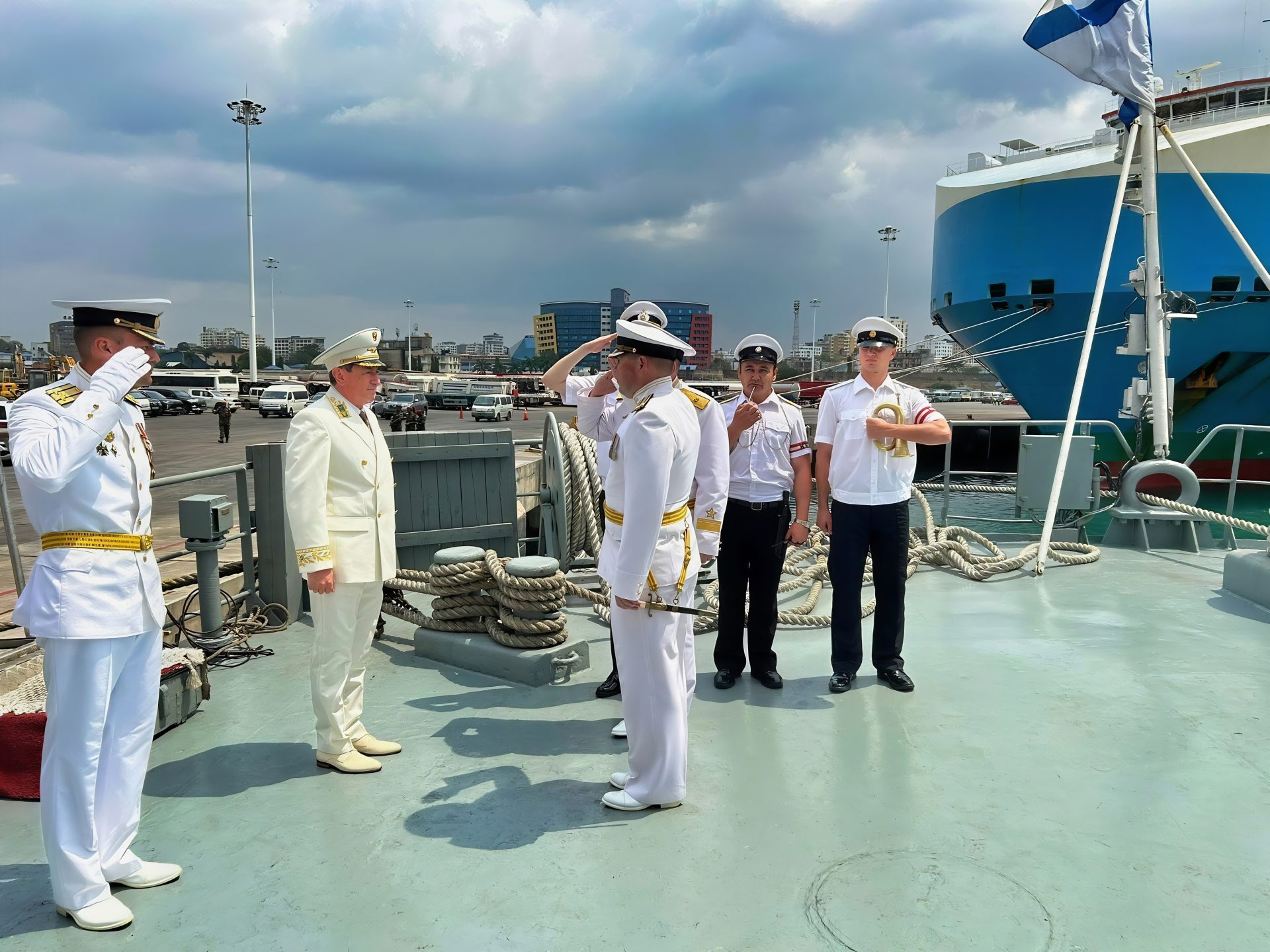
1. The Arms Deal Horizon
A. Near-Term Prospects (2024-2027)
Fleet Modernisation:
Likely purchase of 2-4 Project 22160-type patrol vessels ($120-180m each)
Upgrade packages for existing Soviet-era assets (Petya-class frigates)
Coastal Defence Systems:
Bastion-P mobile anti-ship missile systems
Russian-made drones for maritime surveillance
B. Potential Game-Changers
Subsurface Capabilities:
Discussions about used Kilo-class submarines (post-2026)
Tanzania’s first subsea deterrent would reshape regional power dynamics
Maintenance Infrastructure:
Proposed Russian-funded naval repair yard in Tanga
Would reduce dependence on South African/Singaporean dry docks
2. The BRICS Factor
How the Alliance Reshapes Cooperation:
| BRICS Mechanism | Impact on Tanzania-Russia Ties |
|---|---|
| New Development Bank | Alternative financing for arms purchases |
| Space Cooperation | Potential maritime surveillance support |
| Local Currency Trade | Sanctions-proof transactions |
| Cybersecurity Working Group | Joint Indian Ocean network protection |
“We’re no longer choosing between East and West, but accessing all compass points” — Tanzanian Defence Ministry official
3. African Agency in the New Great Game
A. The Sovereignty Paradox
Positive Trends:
63% of African nations now diversify military partners (up from 41% in 2010)
Tanzania’s “mix-and-match” approach (Russian training + Chinese infrastructure + Western tech)
Ongoing Challenges:
Equipment interoperability issues
Competing political conditionality from partners
B. The Tanzanian Model
Strict Non-Alignment: No foreign bases or exclusive agreements
Technology Transfer Insistence: Local production clauses in new deals
Regional Leadership: Using Russian training to bolster SADC maritime capabilities
4. The Infrastructure Imperative
Pending Decisions with Long-Term Consequences:
Option 1: Russian-Built Naval Base (Mtwara)
Pros: Strategic depth for Indian Ocean operations
Cons: Risk of sovereignty erosion (Djibouti precedent)
Option 2: Hybrid Public-Private Port (Bagamoyo)
Pros: Economic development spin-offs
Cons: Potential Chinese operational control
Option 3: Status Quo Plus
Upgrade existing facilities with multilateral funding
Maintain strategic flexibility
5. The Sovereignty-Security Tightrope
Emerging Best Practices for African States:
The 30-40-30 Rule:
30% Western equipment/training
40% Russian/Eastern systems
30% Local/African solutions
The “No Boots” Policy:
Accept technical advisors but no foreign combat troops
Mozambique’s Wagner experience as cautionary tale
Conclusion: Africa’s Maritime Destiny
As the old coastal proverb reminds us: “The tide lifts all boats, but only skilled sailors reach the open sea.” Tanzania’s evolving partnership with Russia represents both the opportunities and perils of Africa’s growing military agency.
The coming years will reveal whether this cooperation:
Empowers Tanzania as a true maritime leader, or
Enmeshes it in great power rivalries
For all of Africa, the broader lesson is clear: partnerships should be like mangrove roots—strong enough to anchor against storms, yet flexible enough to bend with changing tides. As Tanzania negotiates its defence future, its choices will echo across every African coastline seeking both security and sovereignty in turbulent times.
Charting Sovereign Waters: The Lasting Wake of Russian-Tanzanian Naval Cooperation
“The wise sailor knows the tide’s embrace must never become its prisoner”
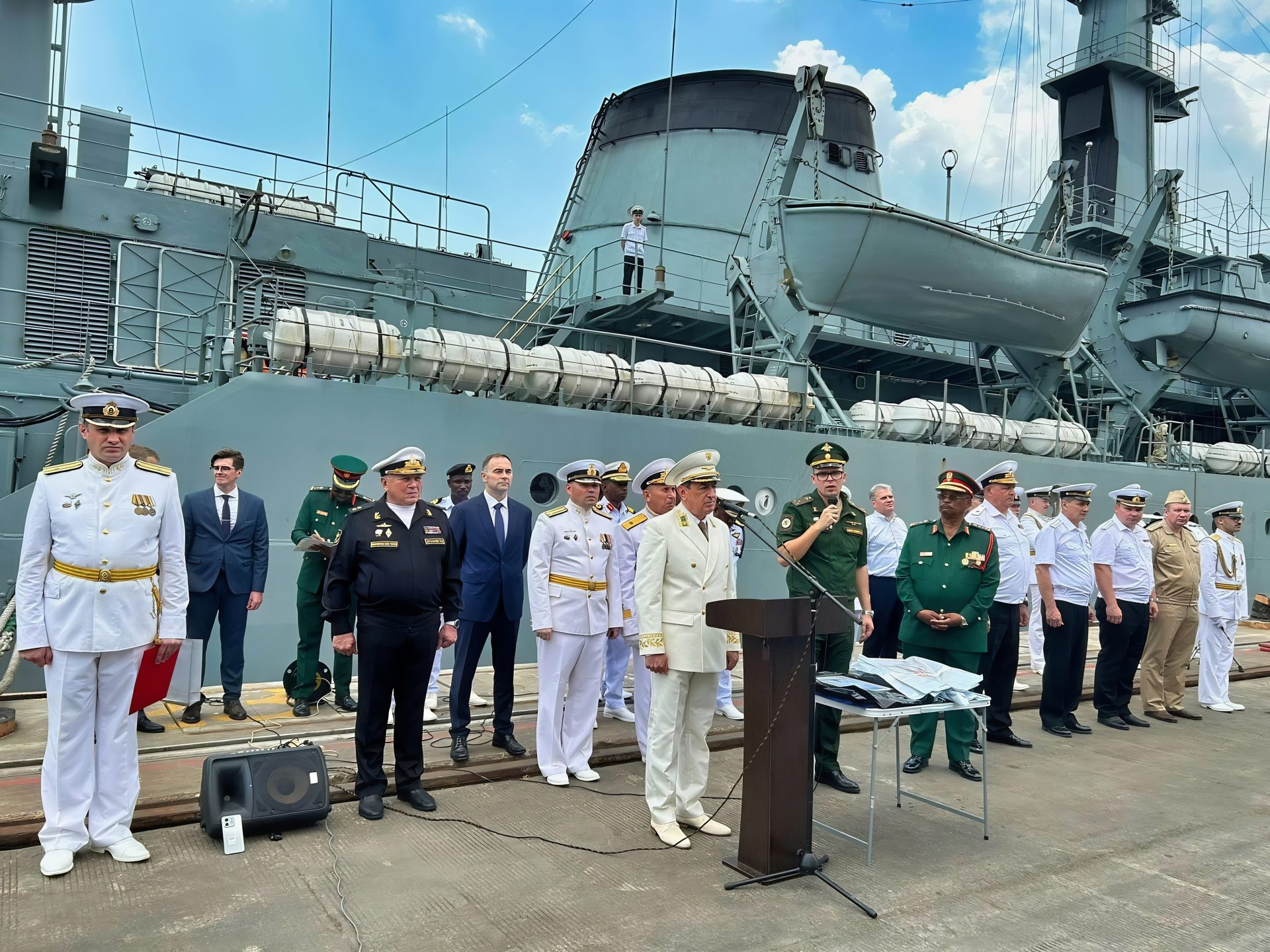
This timeless Swahili proverb captures the essence of Tanzania’s delicate balancing act as the Russian training ship Smolny completes its diplomatic mission in Dar es Salaam. The vessel’s departure leaves behind more than fading ripples in the harbour—it marks a pivotal moment in Tanzania’s maritime strategy and Africa’s broader geopolitical reckoning.
1. The Strategic Anchors of Partnership
For Tanzania:
Capability Leap: 150 newly trained naval personnel joining a 2,500-strong maritime force
Regional Posturing: Demonstrated capacity to host advanced naval training without foreign basing
Economic Calculus: $230 million in avoided costs by leveraging Russian-subsidised programmes
For Russia:
African Foothold: 9th successful naval diplomacy mission to Africa in 2024
Arms Market Expansion: Projected $1.2 billion in future Tanzanian naval procurement
Diplomatic Win: Strengthened non-aligned ally in UN voting blocs
2. The Autonomy Equation
Tanzania’s Safeguards:
The 40% Rule: No single foreign partner provides over two-fifths of military training
Localisation Mandates: Russian contracts now require:
25% Tanzanian crew on all joint operations
Swahili-language technical documentation
Sunset Clauses: All agreements include 5-year renegotiation windows
Comparative African Models:
| Country | Partner | Sovereignty Safeguards | Outcome |
|---|---|---|---|
| Mozambique | Russia | None initially | Wagner overreach |
| Senegal | Multiple | Strict tech transfer requirements | Balanced capability |
| Tanzania | Hybrid | Cultural firewall provisions | Ongoing success |
3. The Coming Storm Fronts
2025-2030 Flashpoints:
Gas Field Security: Protecting $30B LNG projects with Russian equipment but Western investors
Channel Patrols: Potential Russia-Tanzania-Kenya trilateral anti-piracy force
Cyber Integration: Russian GLONASS vs Western GPS for naval navigation
“We’re not choosing sides—we’re choosing capabilities” — Tanzanian Naval Chief Admiral Hassan Mwinyi
4. Africa’s New Maritime Playbook
The Smolny model suggests emerging best practices:
The Port-Call Principle:
Temporary visits over permanent bases
72-hour diplomatic cooling-off period between partner rotations
The Curriculum Commons:
Standardised core training adaptable to multiple equipment origins
The Obsolescence Pact:
Contractual guarantees against technological dead-ends
5. The Helm of History
As the sun sets on this naval visit, another coastal adage comes to mind: “The departing ship’s wake tells the coming tide’s tale.” Tanzania’s careful navigation of this partnership offers Africa a template for the 21st century—one where:
Training matters more than treaties
Interoperability outweighs ideology
Sovereignty is measured in maintenance manuals rather than military bases
The ultimate test will come when Tanzania’s Russian-trained sailors must defend national waters without foreign advisors. When that day arrives, the true value of this partnership will be measured not in signed agreements or port visits, but in Tanzania’s ability to stand as an equal among nations—master of its waters, architect of its destiny.
Tanzania Media

- In Mpanda, a Call for Peace Meets a Cry for Justice: The Complex Dialogue Between Police and Citizens - 18 November 2025
- Complete List of New Tanzanian Ministers and Deputy Ministers Announced - 17 November 2025
- A New Chapter for Tanzania: Unity, Progress, and Human Dignity - 15 November 2025
RELATED PUBLICATIONS:
 From Liberation to Economic Partnership: The Legacy of Tanzania and Namibia Relations
 Celebrating 61 Years of Tanzania’s Union: A Legacy of Resilience and Hope Under Dr. Samia Suluhu Hassan
 FORGOTTEN HEROES OF TANZANIA’S INDEPENDENCE STRUGGLE
 Introduction: The history of the Tanzanian armed forces
 CELEBRATING 60 YEARS OF TANZANIAN UNION: A TESTAMENT TO UNITY AND PROGRESS
 Simplifying Tax Processes in Tanzania: Strategies for Compliance and Growth
 HOW THE EMBASSY OF TANZANIA IN JAPAN CELEBRATED TANZANIA’S 60TH ANNIVERSARY
 DR. TULIA ACKSON’S VISIT TO RUSSIA: STRENGTHENING INTERNATIONAL PARLIAMENTARY RELATIONS
 Paul Kagame’s Arrogance and Impunity: A Closer Look at Rwanda’s Proxy War in DRC
 Jurisdiction in Tanzanian Law: A Complete Guide to Court Powers & Legal Boundaries
 MISUSE OF INFORMATION AND COMMUNICATION TECHNOLOGY
 AFRICAN QUR’AN COMPETITION AT UHURU STADIUM
 THE PORT OF MTWARA HAS RECEIVED TWO MOBILE HARBOUR CRANES
 CONDOLENCE FROM THE MAASAI ASSOCIATION TO DR HUSSEIN ALI MWINYI
 THE MINISTER OF DEFENCE, DR. STERGOMENA TAX, HAS INAUGURATED A CUTTING-EDGE PATROL BOAT
 HOW TO COMPETE TO BRING DEVELOPMENT TO CITIZENS – INSIGHTS FROM DR. HUSSEIN ALI MWINYI
 The revitalisation of the TAZARA Railway: A New Era of Cooperation Between Tanzania, China, and Zambia
 Development Projects in Misungwi District
 Zanzibar Voter Registration Update: NEC Prepares with Training Programs
 Angola and Tanzania Strengthen Defense Cooperation: Minister of Defense Visits Ruvu Camp
 Faith and Governance: The Significance of the National Prayer Event for President Samia Suluhu Hassan
 Monduli District Shines as a Model of Participatory Governance Ahead of 2025 Polls
 Inspiring Young Minds: A Journey Through Innovation and Safety at the TARURA Pavilion in Singida
 A New Chapter for Tanzania: Unity, Progress, and Human Dignity